Friday
May 15,2009

Pacific Gas & Electric on Wednesday announced it has gone into solar-power contracts with Oakland’s BrightSource Energy to produce a total of 1,310 megawatts of electricity. That’s enough to power 530,000 California homes during peak hours— 12 noon – 7pm.

Solar farm by BrightSource Energy

Solar farm by BrightSource Energy

Go California! Wait! Let me check my PG&E bill. Somebody has to pay for this.

The new agreement includes seven power plants. This is in addition to a deal the two companies struck in April 2008. In that deal 900 megawatts would come from solar thermal power.

BrightSource now has 2,610 megawatts under contract. The new PG&E contract is the largest. BrightSource folk say their output represents more than 40 percent of all large-scale solar thermal contracts in the United States.

“The solar thermal projects announced today exemplify PG&E’s commitment to increasing the amount of renewable energy we provide to our customers throughout Northern and central California,” senior vice president of energy supply for PG&E, said in a statement. “Through these agreements with BrightSource, we can harness the sun’s energy to meet our customers’ power requirements when they need it most — during hot summer days.”


CEO of BrightSource Energy, said the additional contracts came about after BrightSource showed off its technology in Israel with results that were “at or above all the specifications.”

“It proved to them that our technology works. They saw us executing and delivering” efficient solar energy production.

Gov. Schwarzenegger terminated in “more evidence that reliable, renewable and pollution-free technology is here to stay and sunshine will eventually power hundreds of thousands of homes and businesses across our golden state.”

Construction costs for BrightSource will be at least $3 billion and the facilities will be located in the southwestern deserts of California, Nevada and Arizona. The first plant, a 110-megawatt facility at Ivanpah in eastern San Bernardino County will begin operation by 2012.

What I want to know is who is going to pay for this? More specifically, how much will my PG&E bill be going up each month to fund this new venture?

If you're new here and you like our articles, how about subscribing free for our updates via RSS feed.

Wednesday
Feb 25,2009

We love it when companies invest time and money to coming up with concepts that shape a better future. But what’s more interesting, is that some of these concepts actually come to life.

Swiss tuning designer and car manufacturer, Rinspeed, just announced that they’ve been working to build a solar powered vehicle dubbed iChange. The concept is actually a lightweight electric vehicle (features solar panels on the roof and sides) that is capable to change shape according to the number of passengers on board.

With no doors and a teardrop-like silhouette, the new iChange brings in three powerful li-ion batteries that take three hours to fully charge and offer a 90km range. As for how powerful it is, the engine outputs 150 kW that helps it go naught to 100km/h in just 4.2 seconds and achieve a max speed of 220 km/h.

Expected to hit the floors next month at the 2009 Auto Show in Geneva, we’re pretty sure a bunch of “green eyes” will be on Rinspeed.

[Cnet & Green Car Congress]

Friday
Feb 20,2009

Solar energy is still running well despite the bad economic environment and while people are searching for green alternatives, designers are trying hard to come up with stylish and innovative options, that blend creativity with utility. Designed by Jongoh Lee, the beautiful, ergonomic and natural looking streetlights merge seamlessly into the natural canopy around to harness solar power effectively. The cute and leaf-like streetlights capture sun’s energy throughout the day and use it to power what looks like their LED lights during night.

Dubbed the ‘Invisible Streetlights’ they have a flexible body that allows to be part of any natural tree that lines up the streets of the big cities. However, the problem with the model is obvious: it needs a clear top above the light to tap into the sun’s rays and clear space beneath, to emit light at night.

Of course, it works great as even interior lighting option if you could modify it to suit your needs!

[via Ecofriend]

Monday
Dec 8,2008

he problem is not why Japan cannot meet its protocol goals. The problem is why Japan doesn’t know WHY it’s not meeting its goal. Consider these two most recent Christmas displays.

kobeluminarie.jpg

This one is not technically a Christmas display, but it’s Christmas, and here it is. It’s called the Kobe Luminarie in central Kobe, home of Kobe Bryant and Kobe beef. The Luminarie has been running annually since 1996. It will end on Dec. 15th. It is built to remember the 1995 Great Hanshin Earthquake. GP thinks that Japan could remember those who died in the earthquake by taking better care of the environment left for those who are still alive.

This one is a Christmas display.

shiodome.jpg

It is the Caretta OCEAN Christmas 2008 at Shiodome in Tokyo and will run through Dec 25.

Maybe…maybe…Japan could learn a lesson from the guys who made this tunnel at the Toki no Sumba resort in Shizuoka prefecture. The entire thing is lit up with lights from solar power.

solarpowertunnel.jpg

Now, if they could just figure out how to do the Christmas displays and commemorations with solar power at night, eh?

Thursday
Nov 20,2008

Most of the RVs out there are arguably the worst things to happen to the planet in terms of both efficiency and carbon emissions.

But unlike those, the Verdier Solar-Powered Eco-RV is quite a simple and stunning green carrier as it mixes design, solar energy and some sort of lavish luxury. Five models dubbed Woody, Geeky, Ebony, Blueberry, and Purity, are being powered by a 4-cylinder hybrid engine and have a 170 W solar system installed on the roof.

Verdier’s solar RV allows you to change the direction of the panels on top of the carrier according to sun’s direction using a GPS system. Another interesting thing is the interior. Built to use the available space to the maximum, there are fold-out beds, rolled-up stairs, kitchen, recycling bins, a refrigerator/freezer combo and an on-board entertainment center with projector, surround sound and a roll down screen.

There is also an on-board computer to make sure that you stay connected while on the road as you can use it for tasks ranging from navigation, to Internet browsing to music and entertainment. With a price of $129,000 the solar-powered eco-RV is really a great “bargain” (not for you) for the planet. – via Jetson Green

Thursday
Oct 16,2008
Nature - an energy-capturing powerhouse

Nature - an energy-capturing powerhouse

A London-based company, Solar Botanic, claims to have developed life-like artificial plants and trees that have the ability to trap solar and wind power. The prominent feature of these plants is the ‘Nano Leaf‘ which can harness these powers.

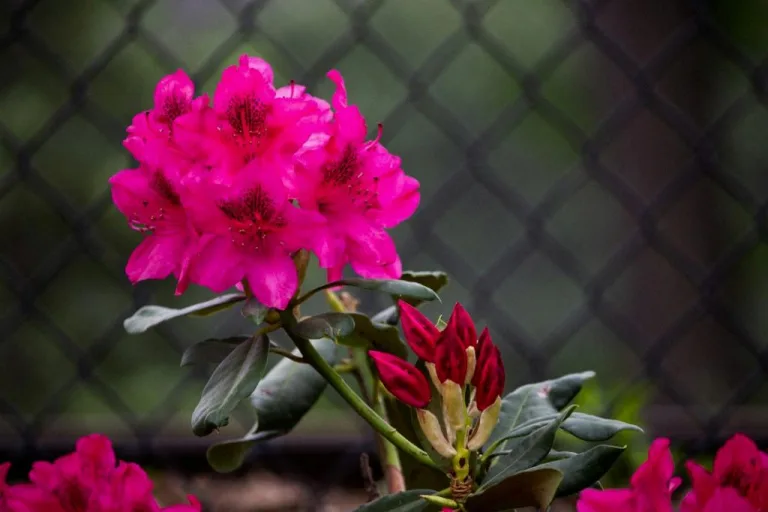

Its photovoltaic and thermo voltaic cells absorb the sun’s energy while the branches produce electricity whenever the wind brings movement in them. According to the company’s calculations, an average-sized tree with a 6sq meter canopy can produce reasonable energy to suffice a single household.

The company also plans to use this energy to power motorways, suburban streets and parks and everywhere else that trees can be planted. What lies in future for this invention is yet a distant thought? Since Solar Botanic has not divulged much of its plans, we will just have to watch for its developments. – via CleanTechnica

Nano-leaf technology : Environmental Benefits

Nano-leaf technology : Environmental Benefits

Wednesday
Oct 8,2008

Tokyo has its eyes on weaning electric, gas, and petroleum companies from fossil fuels. The Japanese government will require the big users to utilize certain amounts of nonfossil fuels – solar, hydraulic and nuclear power.

The goal is for the proportion of nonfossil fuels to be 30% of the total energy supplies in Japan by 2030. It was 18% in 2005. Japan’s Ministry of Economy, Trade and Industry will overhaul a 30 year old law to promote the development and use of nonpetroleum fuels.

Japan wants to:

1. stop relying on foreign oil

2. fight global warming

3. and to reduce dependence on natural gas, coal and other greenhouse gas generators.

Energy companies already are required to use solar and wind power. Under the new law, nuclear power will be a requirement as well. Which country will be the next to follow suit?

Thursday
Sep 4,2008

There are times, when we think we’ve done enough bad and it’s time for some good. A couple of years ago when I didn’t care much about the planet, pollution and stuff like that, I realized that I’ve never planted a tree in my life. So what happened? I bought one and planted it in my parent’s garden, at their house outside the city.

Since then, technology advanced, and for those that won’t plant a real tree we have the solution. The solar tree. Designed by Vivien Muller and using 54 photovoltaic cells (when blooming) it has a bonsai tree aspect (with some sort of solar “leaves”?) and is both a great piece of decoration and a pretty useful eco-gadget; doesn’t require watering and will power at least some of your electronics by using solar power.

So what are you going to do, buy a solar tree for your gadgets or seed a real tree? I’ll go for the latter.

via Gizmodo

Solar Power Hindu Temple

Thursday
Jul 10,2008

Though it may not be the exact place where I was expecting solar technology to be installed in, a Hindu Temple in California is ready to set a sustainable example. The BAPS Chino Hills Hindu Religious & Cultural Center is going to be built on a 20 acre-site, northeast of the 71 Freeway, between Monte Vista and Central Avenues.

Solar-powered Hindu Temple

The temple is going to benefit from a 60kW (kilowatt) grid-tied solar power system supplied by GoGreenSolar. 60kW is more than they need so the excess power will be sent to the local grid for distribution.

Estimations on how this new system will help the environment revealed that it should would reduce CO2 emissions by ~1,550 tonnes, which is the equivalent of planting 62,244 trees, over a period of 25 years. But they’re not going to stop here, because the temple will make use of the new solar tube lighting system that will eliminate the use of light bulbs during the day and will drastically cut on power consumption.

Solar-powered Hindu Temple

Solar-powered Hindu Temple

Other than using the sun’s light for energy and reducing energy consumption, they’re going to plant some 400 species of trees to better the air quality in the area and to make it a place of love, peace and harmony. My humble opinion is that they’ll succeed. Deserves applause or am I wrong?

Sources:
Chino Hills Hindu Religious & Cultural Center

Swaminarayan Sanstha

Via GoGreenSolar

Tuesday
Jun 10,2008

solar-charged-cell-phone-strap.jpgMy wife needs one of these things from Strapya and Tokyo Coil Engineering. The companies have come up with a plan to prevent missing phone calls. A solar-charged cell phone strap.

The strap weighs just 40g (1 oz) and is just 12.5cm (5 in) long. Yet it can store up to 40 minutes of call time once fully charged.

Just one problem … it takes 6-10 hours to charge in perfect weather conditions.

The solution…let the strap hang out of your pocket or bag and walk around outside all day. Or, you can just plug the dang thing in every night to keep it charged.

Price – Y1,995 ($20)

source